News

What are the advantages of sheet metal bending and stamping in processing complex-shaped parts?

Publish Time: 2025-11-17
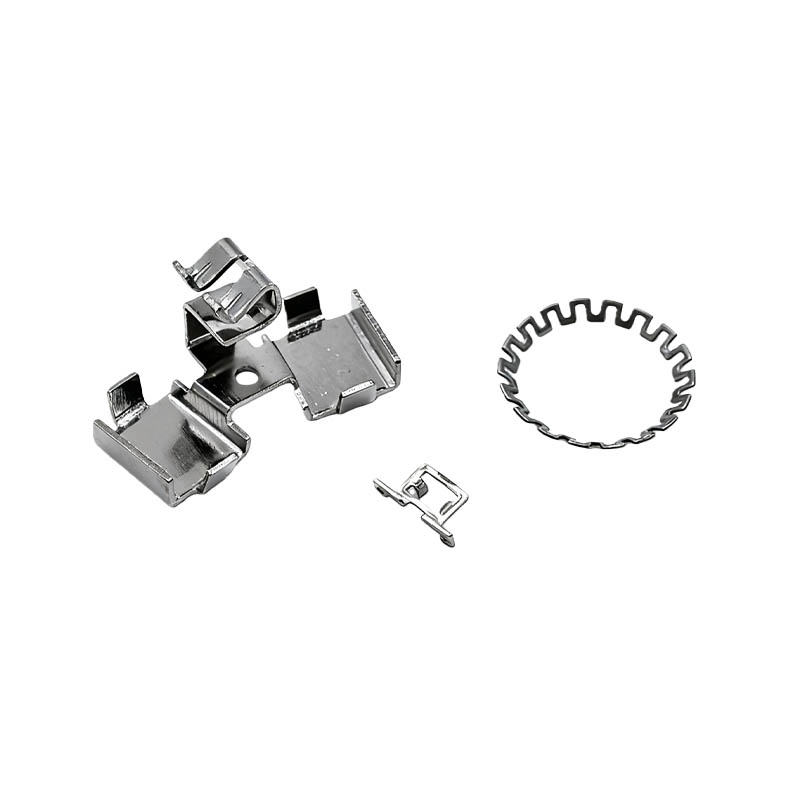
As the manufacturing industry moves towards higher precision, higher efficiency, and greater flexibility, sheet metal processing technology is constantly upgrading. Among these, CNC sheet metal bending and stamping machines, with their intelligence, high precision, and strong adaptability, demonstrate significant advantages in processing complex-shaped parts and have become an indispensable core equipment in modern precision manufacturing. Compared to traditional manual or semi-automatic bending equipment, CNC bending technology effectively solves many problems in the forming of complex structural parts through program control, multi-axis linkage, and intelligent compensation.

1. High Precision and Repeatability Guarantee Complex Geometric Forming

Complex-shaped sheet metal parts often contain multiple non-standard angles, asymmetrical structures, or continuous variable-angle bends, requiring extremely high forming accuracy. CNC bending machines use servo motors to drive the slider and back gauge system, combined with high-resolution grating rulers for real-time feedback, achieving angle control accuracy within ±0.1° and positioning accuracy within ±0.05mm. This high repeatability ensures that even in mass production, the bending angle, side length, and spatial position of each part remain highly consistent, preventing assembly failures due to accumulated errors. Furthermore, advanced CNC systems support 3D graphical programming and virtual bending simulation, allowing for pre-process simulation of the entire bending process before actual machining, identifying interferences or process conflicts in advance, and significantly improving the first-piece yield.


2. Multi-axis linkage and flexible programming to handle structural diversity

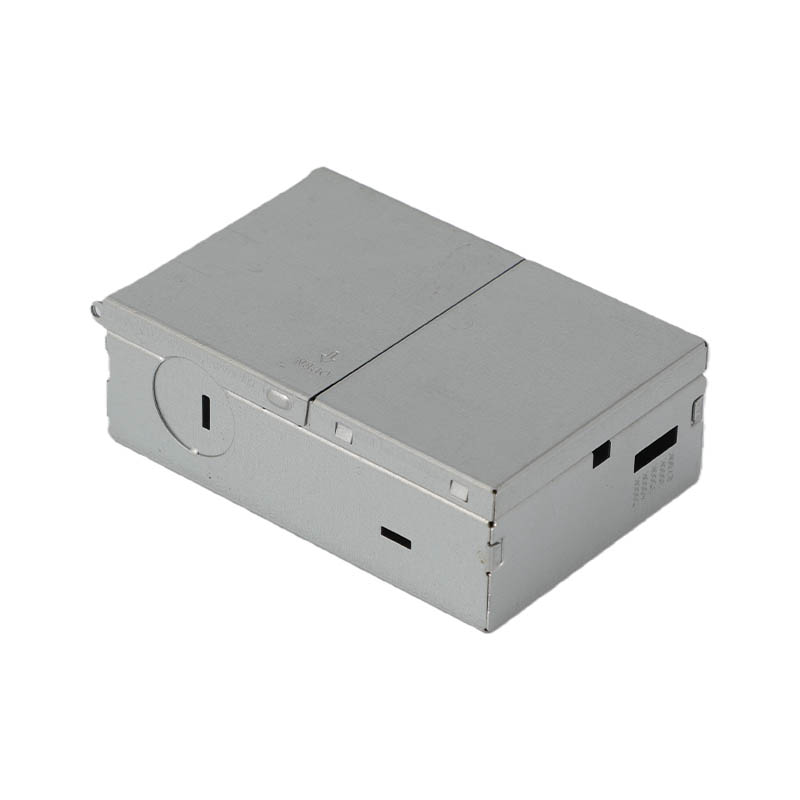
Complex parts often require multiple passes and multiple directions of bending, sometimes involving Z-axis flipping and workpiece rotation. Modern CNC bending machines are generally equipped with control systems of 6 axes or more, enabling multi-degree-of-freedom coordinated motion. For example, when machining chassis with internal grooves or nested structures, the CNC system can automatically plan the optimal bending sequence and use rotating stops or robotic arms to accurately position space-constrained areas. Simultaneously, based on parametric programming or offline programming software, engineers can quickly import CAD models to automatically generate bending programs, significantly shortening process preparation time, especially suitable for flexible production modes with small batches and multiple varieties.

3. Intelligent Compensation Technology Enhances Forming Stability

Differences in material properties, mold wear, or temperature changes can easily lead to bending springback, affecting the final dimensions of complex parts. High-end CNC bending machines integrate automatic springback compensation functions. By pre-storing springback coefficients for different materials in a database or combining with an online angle measuring device to adjust the pressing depth in real time, they dynamically correct angle deviations. Some models also feature a "learning bending" mode—automatically recording the actual springback value after a trial bend and updating subsequent programs to achieve closed-loop control. This intelligent compensation mechanism significantly improves the consistency and yield of complex parts, reducing manual debugging costs.


4. Integrated Automation Expands the Boundaries of Complex Part Processing

For larger or heavier sheet metal parts with more complex structures, single equipment is insufficient. CNC bending systems can seamlessly integrate with loading and unloading robots, automatic mold changing devices, and AGV logistics systems to create fully automated bending units. For example, in the production of communication cabinets or new energy electrical control boxes, robots pick up cut sheet metal and feed it sequentially into the bending machine according to the program to complete multi-faceted forming, without any manual intervention. This integrated solution not only improves safety but also enables deep cavities, narrow slits, or multi-faceted continuous bending—previously difficult to achieve due to manual operation limitations—greatly expanding the design freedom for complex parts.

CNC sheet metal bending and stamping technology, with its high-precision control, multi-axis flexible linkage, intelligent compensation algorithms, and automated integration capabilities, exhibits unparalleled advantages over traditional processes when machining complex-shaped parts. It not only improves forming quality and production efficiency but also pushes the boundaries of product design innovation.
×

Contact Us

captcha